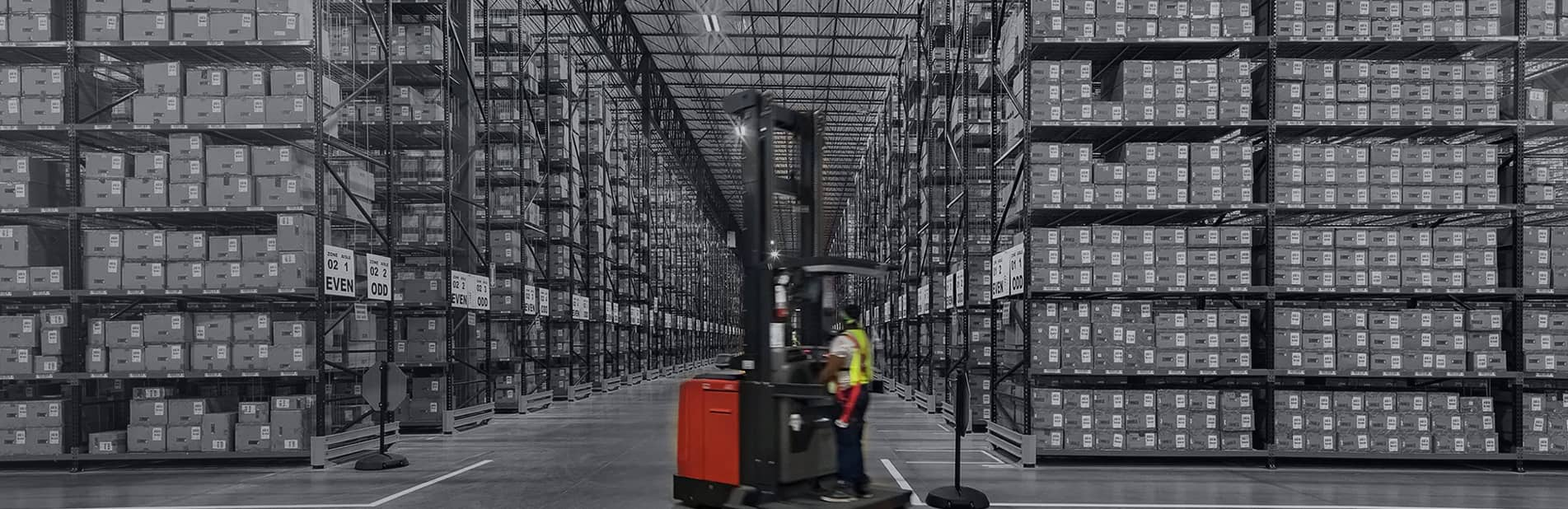
How to Choose a Heavy Duty Diesel Forklift for Your Application?
Nov 23, 2026Choosing a heavy duty diesel forklift is not just about selecting a truck with a higher lifting capacity. The right machine needs to handle the actual weight, dimensions, center of gravity, lifting height, ground conditions, working hours, and operating environment of your materials. A forklift that performs well in a warehouse may not be suitable for moving steel coils, oversized machinery, timber bundles, or heavy containers outdoors.
For applications involving large loads and demanding working conditions, a heavy duty diesel forklift offers high lifting capacity, strong traction, fast refueling, and reliable performance in outdoor industrial environments. NEO FORKLIFT supplies heavy-duty diesel counterbalance forklifts for material handling applications ranging from steel yards and ports to manufacturing plants and construction sites.
This guide explains how to choose a heavy duty diesel forklift for your application, what specifications matter most, and how to match the right capacity, engine, tires, mast, and attachments to your daily operations.
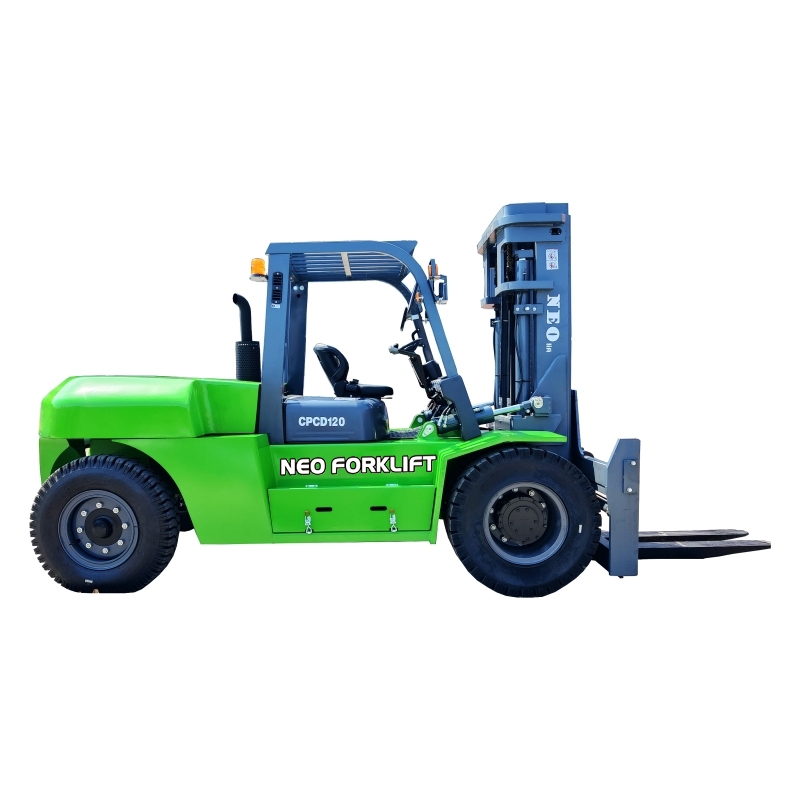
Heavy-duty diesel forklifts are designed for handling large loads in industrial, outdoor, and demanding material-handling environments.
A heavy duty diesel forklift is a counterbalance forklift powered by a diesel engine and designed to lift and transport loads that exceed the capacity of conventional warehouse forklifts. Depending on the model, lifting capacities may range from approximately 6 tons to more than 50 tons.
These forklifts typically feature reinforced chassis structures, high-capacity hydraulic systems, large pneumatic tires, powerful engines, and heavy-duty lifting masts. Their design supports demanding operations where loads are large, working surfaces may be uneven, and equipment is required to operate for extended periods.
Unlike standard forklifts commonly used for pallets and light warehouse goods, heavy-duty models are frequently used to handle steel products, machinery, timber, stone, construction materials, industrial components, and large cargo.
NEO FORKLIFT offers a variety of heavy duty diesel forklifts for industrial applications, with lifting capacities ranging from 6 tons to 55 tons. Buyers can choose the appropriate model based on load weight, handling requirements, and operating conditions.
The rated capacity printed on a forklift is not a guarantee that the machine can safely lift every load of that weight under all conditions. Load center, attachment weight, lifting height, mast configuration, and load dimensions can change the forklift's available capacity.
Before choosing a forklift, identify the heaviest load you will handle, its dimensions, and how it will be picked up.
| Load Type | Typical Handling Considerations | Forklift Selection Priority |
|---|---|---|
| Steel plates and profiles | Long, dense, sometimes irregular loads | Capacity, fork length, attachment compatibility, stability |
| Steel coils | Concentrated load with a specific lifting method | Coil handling attachment, load center, rated capacity |
| Timber and logs | Long loads, uneven surfaces, outdoor storage | Fork length, tire traction, side stability |
| Machinery and industrial equipment | Heavy, irregular loads with sensitive positioning requirements | Capacity margin, lifting height, precise positioning |
| Stone, concrete, and construction materials | High density, rough working surfaces | Chassis strength, tire type, traction, attachments |
| Containers and heavy cargo | Large loads, frequent loading and unloading | Rated capacity, load center, mast and handling configuration |
For example, a 10-ton load with a long load center may require a forklift rated above 10 tons under the actual operating configuration. The same applies when using a fork positioner, clamp, or other attachment, because attachments can add weight and shift the load center.
Always confirm the forklift's capacity chart for the specified load center, lifting height, and attachment before purchasing or operating the equipment.
Heavy-duty diesel forklifts are commonly divided into capacity ranges. The best capacity depends on your heaviest routine load, the handling method, and whether the machine needs to accommodate occasional heavier loads.
| Capacity Range | Common Applications | Typical Buyer Profile |
|---|---|---|
| 6–12 tons | Steel fabrication, warehouses, industrial yards, building materials | Small and medium industrial businesses |
| 13–25 tons | Heavy machinery, steel, ports, large manufacturing plants | Heavy industrial operations and cargo handlers |
| 28–55 tons | Large steel products, heavy cargo, industrial and port operations | Large-scale material handling and infrastructure projects |
When a 6–12 ton forklift is suitable: This range is often a practical choice for businesses handling heavy pallets, steel materials, machinery, and industrial goods without requiring extremely large lifting capacity. It provides a balance between load capacity, machine size, and operating flexibility.
NEO FORKLIFT offers 6–12 tons heavy duty diesel counterbalance forklifts, with models including CPCD60, CPCD70, CPCD80, and CPCD100. The product range includes lifting heights of 3,000 mm in the listed standard specifications, with engine and configuration options available depending on the model.
When a 13–25 ton forklift is suitable: This range is better suited to heavier steel products, machinery, industrial components, and cargo that exceed the practical capacity of smaller heavy-duty forklifts.

A high-capacity diesel forklift is suitable for handling heavy machinery, steel products, and industrial cargo.
For these applications, NEO FORKLIFT's 13–25 tons heavy duty diesel forklift series includes CPCD140, CPCD160, CPCD180, CPCD200, and CPCD250 models. Depending on the configuration, rated loads range from 14,000 kg to 25,000 kg, with optional Yuchai, Weichai, or Cummins engine configurations.
When a 28–55 ton forklift is required: Very heavy loads such as large steel components, heavy industrial machinery, and oversized cargo may require a much higher-capacity forklift. These machines have larger dimensions and operating weights, so the working area, ground bearing capacity, turning space, and transportation arrangements should also be considered.
For these applications, buyers can review NEO FORKLIFT's 28–55 tons heavy duty forklift range and confirm the required capacity, load center, lifting height, and working conditions with the manufacturer.
Load center is one of the most important specifications in heavy forklift selection. It refers to the horizontal distance from the vertical face of the forks to the center of gravity of the load.
Forklift rated capacity is commonly specified at a particular load center. When the load is longer, its center of gravity may move farther forward, reducing the forklift's effective lifting capacity.
For example, a forklift rated at 10,000 kg at a standard load center may not be able to safely lift a 10,000 kg load that is substantially longer or unevenly distributed. The actual allowable capacity must be checked against the load chart.
When evaluating fork length, consider:
Long forks may improve handling efficiency for specific materials, but they also affect load center, maneuverability, and capacity. Fork dimensions should therefore be selected based on the load rather than simply choosing the longest available option.
Operating conditions can be just as important as load capacity. A forklift working on smooth concrete inside a factory has different requirements from one operating in a steel yard, port, construction site, or outdoor storage area.
Outdoor industrial yards
Outdoor operations often involve uneven surfaces, dust, rain, gravel, and longer travel distances. Pneumatic tires, sufficient ground clearance, durable chassis construction, and appropriate engine performance are important for maintaining traction and handling.
Steel mills and steel distribution centers
Steel materials are dense and frequently long or irregular in shape. Forklift selection should consider the actual material weight, fork length, lifting attachment, load center, and positioning requirements. Fork positioners or other specialized attachments may help operators handle different material widths more efficiently.
Ports and cargo yards
Port operations may involve heavy cargo, frequent loading and unloading, long travel distances, and demanding working schedules. Buyers should evaluate rated capacity, tire durability, engine performance, operator visibility, and service accessibility.
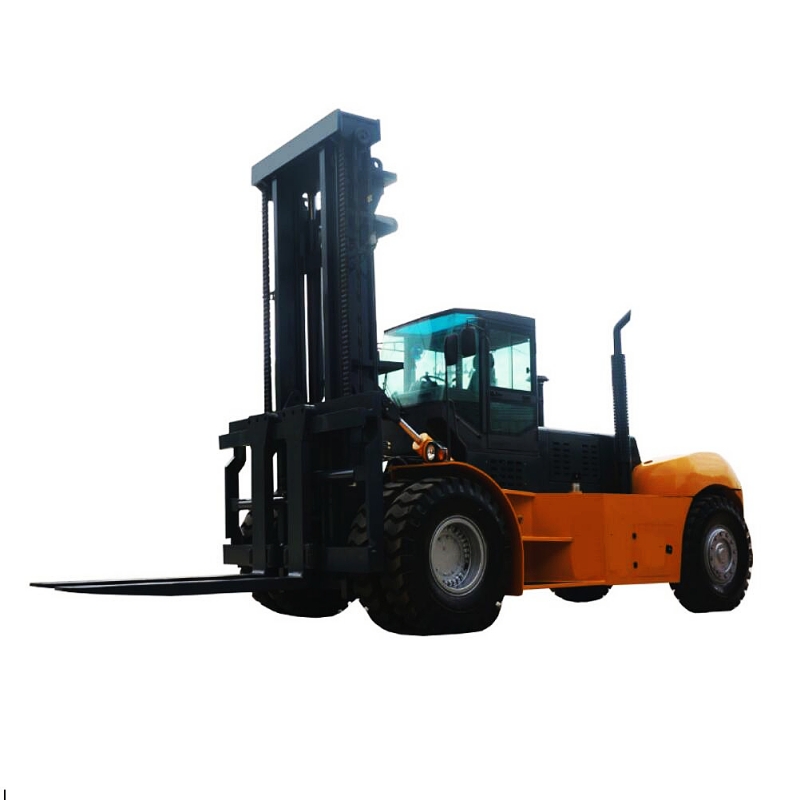
High-capacity forklifts are commonly used in industrial cargo handling where load size, operating space, and ground conditions must be considered together.
Construction sites
Construction material handling can involve concrete blocks, structural steel, machinery, and building materials across uneven terrain. Buyers should assess the surface conditions, slope, traction, ground clearance, load stability, and whether a rough-terrain forklift would be more suitable for the application.
Manufacturing plants
Manufacturing facilities may require forklifts to move raw materials, production components, finished products, and machinery. The truck should be compatible with the plant layout, aisle widths, loading zones, floor conditions, and production flow.
Engine performance influences forklift productivity, fuel consumption, maintenance requirements, and suitability for demanding operating conditions.
For heavy-duty diesel forklifts, buyers may compare Chinese engines, Japanese engines, and internationally recognized engine brands such as Cummins, depending on the capacity class and available configuration.
When comparing engine options, consider:
A forklift used for frequent heavy lifting, long-distance yard travel, or ramp operation may require a different powertrain configuration from one used for occasional loading and unloading. The engine should be selected according to actual duty rather than choosing the largest engine automatically.
Forklift mast selection should be based on the maximum lifting height, the height of storage racks or loading platforms, overhead clearance, and the dimensions of the load.
Heavy-duty forklifts are often used for ground-level loading and stacking, but some applications also require lifting materials onto trailers, storage platforms, or production equipment.
Before selecting a mast, check:
A higher mast may be necessary for stacking, but buyers should confirm the forklift's capacity at the required lifting height. Rated capacity can change as the load is raised, particularly with heavy or extended loads.
Heavy-duty forklift attachments can improve handling efficiency, reduce manual adjustments, and support specialized material handling operations. However, attachments also affect the forklift's weight, load center, visibility, and available lifting capacity.
| Attachment | Application | Selection Consideration |
|---|---|---|
| Fork positioner | Adjusting fork spacing for different load widths | Attachment weight, capacity reduction, hydraulic requirements |
| Side shifter | Moving loads laterally for precise positioning | Remaining capacity and side-shift range |
| Coil handling attachment | Handling steel coils | Coil diameter, weight, orientation, attachment compatibility |
| Clamp attachment | Handling specific packaged or irregular materials | Clamping force, material protection, load stability |
| Long forks or specialized forks | Long materials, oversized pallets, specific lifting points | Fork length, load center, capacity, visibility |
For steel distribution, lumber handling, machinery movement, and other specialized operations, the right attachment may be more important than simply increasing forklift capacity. Buyers should provide material dimensions, handling frequency, and lifting method when requesting a customized solution.
Heavy-duty forklift operators often work long shifts and handle large loads that can restrict visibility. A comfortable and practical operator environment can help improve productivity and reduce fatigue.
When evaluating the cab and operating controls, consider:
For operations involving large loads, safety depends on the correct machine configuration, operator training, load handling procedures, and maintenance practices. A forklift should never be operated beyond its rated capacity or with an attachment that has not been approved for the machine.
A heavy-duty diesel forklift is a major equipment investment. The purchase price is only one part of its total operating cost over the years of service.
Buyers should consider the following cost factors:
A lower-priced forklift may be attractive, but the cost of downtime can become significant when the machine is responsible for loading trucks, feeding production lines, or moving materials throughout an industrial yard.
For buyers sourcing equipment internationally, it is also important to compare shipping, customs requirements, spare parts availability, warranty coverage, and after-sales support. A supplier that understands the intended application can help reduce the risk of purchasing an unsuitable configuration.
Standard forklift configurations are suitable for many industrial applications. However, some operations require a customized machine because of unusual load dimensions, limited operating space, special lifting methods, environmental conditions, or specific working procedures.
Customization may include:
For example, a steel distribution company handling different lengths of steel profiles may require a fork positioner and longer forks, while a machinery manufacturer may need a forklift with a specific lifting height and precise positioning capability.
NEO FORKLIFT provides customized forklift solutions for specific handling requirements. When requesting a proposal, provide the load weight, dimensions, photos, operating environment, and handling process so the engineering team can evaluate the appropriate configuration.
Before requesting a quotation, use this checklist to organize your application information. Providing these details can help the manufacturer recommend a forklift that matches your operation instead of offering a generic model.
| Information Needed | Details to Confirm |
|---|---|
| Maximum load | Heaviest load weight in kg or tons |
| Load dimensions | Length, width, height, lifting points, load center |
| Lifting height | Maximum required height and mast clearance |
| Working environment | Indoor, outdoor, steel yard, port, factory, construction site |
| Ground conditions | Concrete, asphalt, gravel, uneven ground, slopes |
| Operating hours | Hours per shift and shifts per day |
| Attachments | Fork positioner, side shifter, clamp, coil handler, special forks |
| Engine preference | Chinese, Japanese, Cummins, or other available options |
| Site restrictions | Aisle width, overhead clearance, turning space, transport access |
The more complete your application information is, the easier it becomes to compare specifications and avoid unnecessary equipment upgrades or capacity mismatches.
What is considered a heavy duty diesel forklift?
A heavy-duty diesel forklift is generally a high-capacity forklift designed for handling large or heavy loads in industrial environments. Capacity ranges vary by manufacturer and product category, but heavy-duty models commonly begin around 6 tons and can extend to more than 50 tons.
How do I choose the right capacity heavy duty forklift?
Start with the heaviest load you need to lift, then consider its dimensions, load center, lifting height, attachment weight, and operating environment. The rated capacity must be sufficient for the actual handling configuration, not just the load's nominal weight.
What industries use heavy duty diesel forklifts?
Heavy-duty diesel forklifts are commonly used in steel manufacturing and distribution, ports, construction, machinery manufacturing, timber yards, mining-related operations, building materials handling, and large industrial warehouses.
Are diesel forklifts suitable for outdoor operations?
Yes. Diesel forklifts are widely used outdoors because they offer strong traction, high power, and fast refueling. Pneumatic tires and suitable configurations can support operations on outdoor surfaces, although the specific tire and forklift design should match the ground conditions.
What is the difference between a 10-ton and a 20-ton forklift?
A 10-ton forklift is suitable for loads within its rated capacity and specified load center, while a 20-ton model is designed for substantially heavier loads. Larger models also have different dimensions, operating weight, turning requirements, and powertrain configurations. The correct choice depends on the actual load and working conditions.
Can a heavy duty forklift handle long steel materials?
Yes, but the forklift must be configured for the material length, load center, weight distribution, and lifting method. Longer forks, fork positioners, or specialized attachments may be required. The allowable capacity must be confirmed for the selected attachment and load configuration.
Which engine brand should I choose for a heavy duty diesel forklift?
The best engine depends on the required power, operating hours, fuel consumption, service availability, spare parts support, and budget. Buyers should compare available Chinese and imported engine options based on their local operating conditions rather than choosing by brand name alone.
Can NEO FORKLIFT customize a heavy duty diesel forklift?
NEO FORKLIFT can provide customized configurations according to load requirements, fork dimensions, attachments, lifting height, engine selection, cab options, and operating conditions. Buyers should provide application details to confirm which customization options are suitable for the selected model.
What information should I provide when requesting a heavy duty forklift quotation?
Provide the load weight and dimensions, required lifting height, load center, working environment, ground conditions, operating hours, preferred capacity, engine preference, attachments, and destination country. Photos or drawings of the load can also help the manufacturer evaluate the application.
Need a heavy duty diesel forklift for your operation?
NEO FORKLIFT offers heavy-duty diesel forklift solutions for steel handling, industrial manufacturing, ports, construction, and other demanding applications. Share your load specifications and working conditions to help identify the right forklift capacity and configuration.
Add:No.609 Tahui Road , Shihudang Town, Songjiang District ,Shanghai, China


Friendly Links :
© 2026 Shanghai Zon-Cho Huge Science And Technology Co., Ltd. All Rights Reserved.
|Sitemap|Xml |Privacy Policy




