Lithium Battery Forklift Guide: Benefits, Cost, Maintenance and Applications
Nov 10, 2026A lithium battery forklift is an electric forklift powered by a rechargeable lithium-ion battery instead of a traditional lead-acid battery or an internal combustion engine. It is designed to handle material transportation, pallet stacking, warehouse operations, and industrial loading tasks with lower routine battery maintenance, flexible charging, and zero tailpipe emissions during operation.
Is a lithium battery forklift worth the investment? For businesses operating multiple shifts, handling frequent material movements, or working in indoor facilities, a lithium-powered forklift can improve equipment availability and reduce battery-related operating costs. Its higher initial purchase price may be offset by lower maintenance requirements, more efficient energy use, and less charging downtime over the equipment's service life.
However, a lithium battery forklift is not automatically the best choice for every operation. Purchase decisions should consider daily operating hours, load capacity, lifting height, charging infrastructure, working temperature, and the total cost of ownership (TCO).
NEO FORKLIFT offers different electric material handling solutions, including lithium-powered three-wheel and four-wheel counterbalance forklifts, warehouse equipment, and specialized VNA forklifts. With different load capacities and configurations available, businesses can select equipment according to their actual warehouse or industrial requirements.
Quick Guide: What Should Buyers Know About Lithium Battery Forklifts?
A lithium battery forklift is a battery-powered industrial truck that uses a lithium-ion battery pack to supply electricity to its traction motor, lifting motor, and control systems. Instead of burning diesel or LPG, it uses stored electrical energy to drive the vehicle and operate its hydraulic lifting functions.
Most industrial lithium forklift batteries include a Battery Management System (BMS). This system monitors important battery operating conditions, such as cell voltage, temperature, current, and state of charge. Depending on its design, the BMS also manages cell balancing and provides protection against operating conditions outside the battery manufacturer's specified limits.
One commonly used chemistry in industrial material handling equipment is Lithium Iron Phosphate (LiFePO4 or LFP). LFP batteries are widely considered for applications that require stable operation, frequent charging, and a long service life. Other lithium-ion chemistries may also be used, so buyers should confirm the actual battery chemistry rather than assuming every lithium forklift uses LFP.
Compared with a conventional lead-acid electric forklift, a lithium battery forklift offers a different charging and maintenance routine. Operators can often recharge the battery during scheduled breaks, while maintenance teams no longer need to perform the regular watering and electrolyte checks associated with flooded lead-acid batteries.
For example, NEO FORKLIFT's NPML10 mini three-wheel electric forklift comes standard with a lithium iron phosphate battery. Its compact design makes it suitable for warehouse applications where maneuverability and efficient indoor handling are important.
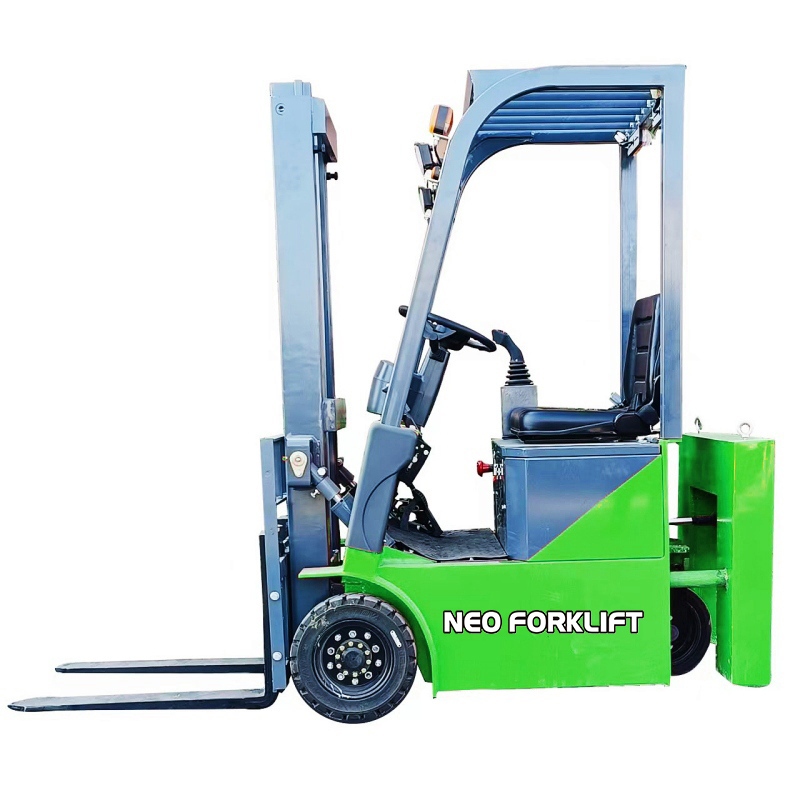
NEO FORKLIFT compact three-wheel electric forklift with lithium battery power.
The main advantage of lithium-powered forklifts is not simply that they use newer battery technology. The real difference is how battery performance affects daily equipment availability, labor requirements, energy consumption, and warehouse workflow.
Faster Charging and Opportunity Charging
Lithium-ion forklift batteries generally accept charging at a higher rate than traditional flooded lead-acid batteries, provided the battery pack, BMS, charger, and electrical supply are designed for that charging rate.
This makes opportunity charging possible in many applications. Operators can connect the forklift to its approved charger during lunch breaks, shift changes, or other scheduled pauses instead of waiting for a full battery discharge before recharging.
For a warehouse running two or three shifts, this flexibility can reduce the need for spare batteries and battery replacement equipment. It also helps managers plan working schedules around shorter charging opportunities.
Actual charging time depends on battery capacity, charger output, available power, battery temperature, and the charging limits specified by the manufacturer. Buyers should request the charging curve and recommended charger configuration when comparing different forklift models.
Lower Routine Battery Maintenance
Flooded lead-acid forklift batteries require periodic electrolyte level checks, distilled water replenishment, terminal cleaning, and equalization charging. These tasks consume maintenance labor and require suitable battery handling procedures.
Sealed lithium-ion forklift batteries do not require electrolyte watering or the same equalization procedures. This reduces repetitive battery maintenance and simplifies daily fleet management.
However, low maintenance does not mean maintenance-free. Battery housings, wiring, connectors, cooling components where fitted, charging equipment, and BMS warnings still need to be checked according to the equipment manufacturer's maintenance schedule.
Higher Energy Efficiency
Lithium-ion batteries generally deliver energy more efficiently than conventional lead-acid batteries. Less electrical energy is lost during the charging and discharging process, which can help lower electricity consumption over a high-use operating schedule.
For companies running large electric forklift fleets, these efficiency differences can become meaningful when combined with reduced maintenance labor and fewer battery replacement interruptions.
Consistent Power Delivery
A properly configured lithium battery can provide more consistent power delivery across its usable charge range than a comparable lead-acid battery. This helps maintain predictable forklift response during lifting, traveling, and handling tasks.
Battery performance still depends on temperature, discharge rate, battery capacity, and the power requirements of the forklift. Selecting a battery with sufficient output capability is especially important for heavy loads, frequent lifting, and demanding working conditions.
Zero Tailpipe Emissions During Operation
Unlike diesel or LPG forklifts, battery-powered forklifts do not release exhaust gases during normal operation. This makes them suitable for indoor workplaces such as warehouses, food processing areas, pharmaceutical facilities, and manufacturing plants where local emission control and air quality matter.
Electric forklifts can also operate with lower noise levels than many internal combustion models, helping improve the working environment in enclosed facilities.
Better Use of Battery Charging Infrastructure
Lithium battery systems can reduce the need for large battery-changing areas, spare battery inventories, and certain maintenance facilities associated with lead-acid fleets. Depending on the equipment and local requirements, charging points can be placed closer to operational areas, making charging schedules easier to manage.
One of the most common questions from forklift buyers is how much a lithium battery forklift costs. The answer depends on the truck's load capacity, lifting height, battery voltage and capacity, manufacturer, configuration, and optional equipment.
In general, a lithium battery forklift has a higher initial purchase price than a comparable lead-acid electric forklift. The battery pack and charging system account for much of this difference.
However, comparing purchase prices alone does not provide a complete picture. Businesses should calculate the total cost of ownership (TCO), which includes all major expenses throughout the equipment's service life.
What Is Included in Lithium Forklift Total Cost of Ownership?
The following table highlights the main cost differences between lithium-ion and lead-acid electric forklifts.
| Cost Factor | Lithium-Ion Forklift | Lead-Acid Forklift |
|---|---|---|
| Initial Investment | Generally higher. | Generally lower. |
| Charging | Faster charging and opportunity charging when supported. | Longer charging and cooling periods are generally required. |
| Battery Maintenance | No regular watering or electrolyte maintenance. | Regular watering, cleaning, and equalization may be needed. |
| Energy Efficiency | Generally higher. | Generally lower. |
| Battery Changeover | Often unnecessary when opportunity charging meets shift requirements. | May be required for intensive multi-shift operation. |
| Charging Facilities | Usually simpler, subject to electrical and safety requirements. | May require dedicated battery rooms and ventilation arrangements. |
| Long-Term Cost | Can be lower in high-utilization operations. | Can remain competitive in low-utilization operations. |
How Can Businesses Calculate Lithium Forklift TCO?
A practical approach is to compare the expected operating costs of both battery configurations over the same ownership period.
TCO = Purchase Cost + Charging Infrastructure + Energy Cost + Maintenance Cost + Battery Replacement Cost + Downtime Cost - Residual Value
For example, a warehouse operating one shift per day may find that a lower-priced lead-acid forklift meets its requirements without requiring additional battery inventory. In this situation, the initial price difference may be more important than the savings from opportunity charging.
By contrast, a distribution center operating multiple shifts may benefit more from lithium technology. Faster charging, reduced changeover requirements, and less battery maintenance can improve fleet availability and reduce indirect operating expenses.
There is no universal payback period. The result depends on annual operating hours, electricity prices, battery size, maintenance labor rates, charger costs, battery warranty, and replacement assumptions. A supplier should be able to provide the technical information needed for a realistic project-specific TCO calculation.
Lithium forklift battery maintenance is generally simpler than flooded lead-acid battery maintenance, but correct charging and routine inspection remain essential for safe and reliable operation.
Check Battery Condition Before Operation
Operators should check the battery display and confirm that the available state of charge is sufficient for the planned working period. Battery warning lights, unusual temperature indications, damaged connectors, loose cables, and visible damage to the battery housing should be reported before use.
Any abnormal battery warning or unexpected performance change should be handled according to the manufacturer's operating instructions.
Use the Correct Charger
A lithium forklift battery must be charged using a compatible charger and approved charging profile. The charger must match the battery voltage, capacity, charging current limits, and BMS requirements.
Do not connect an unknown charger, modify the charging circuit, or bypass the Battery Management System. An incompatible charging system can create equipment damage and serious safety risks.
Take Advantage of Opportunity Charging
When the battery and charger are designed for opportunity charging, operators can recharge the forklift during scheduled breaks or shift changes. This can reduce downtime without needing a complete discharge before every charging session.
However, the charging routine should follow the battery manufacturer's instructions. Not all lithium battery packs have identical charging limits or operating requirements.
Keep the Battery and Electrical Connections Clean
Check battery connectors, charging plugs, cables, and exposed electrical components for dirt, corrosion, looseness, or damage. Keep the battery compartment clean and dry according to the equipment manufacturer's maintenance instructions.
Do not open a sealed battery pack or attempt cell-level repairs unless the work is specifically authorized and performed by qualified battery service personnel.
Monitor Battery Temperature and Storage Conditions
Battery temperature affects charging performance, available power, and service life. High temperatures can accelerate battery degradation, while charging below the permitted temperature may damage certain lithium battery chemistries.
For low-temperature applications, buyers should confirm whether the forklift battery supports cold-storage operation, low-temperature charging protection, or an optional battery heating system.
Follow the Manufacturer's Safety Procedures
Lithium-ion batteries do not require the same electrolyte handling procedures as flooded lead-acid batteries, but they are not completely free from fire or electrical hazards. Damaged cells, internal faults, incorrect charging, or severe physical impact can create dangerous conditions.
Charging points should be located in suitable areas with protected cables, appropriate electrical capacity, and clear access. Follow the battery and forklift manufacturer's instructions, applicable local fire codes, and workplace safety procedures.
Employees should know how to identify abnormal battery conditions and how to respond to an emergency. A battery showing swelling, smoke, unusual heat, leakage, or other signs of failure should be taken out of service and handled under the manufacturer's emergency guidance.
Lithium-powered forklifts are suitable for a wide range of material handling applications. Their advantages are particularly relevant in workplaces that require frequent equipment use, indoor operation, or flexible charging schedules.
Warehouses and Distribution Centers
Warehouses handle pallets continuously throughout receiving, storage, picking, and dispatch operations. Lithium battery forklifts can help reduce charging interruptions and simplify battery maintenance, especially when equipment operates across multiple shifts.
Three-wheel and four-wheel counterbalance forklifts are commonly considered for pallet movement and loading operations, while reach trucks and VNA forklifts support higher-density storage layouts.
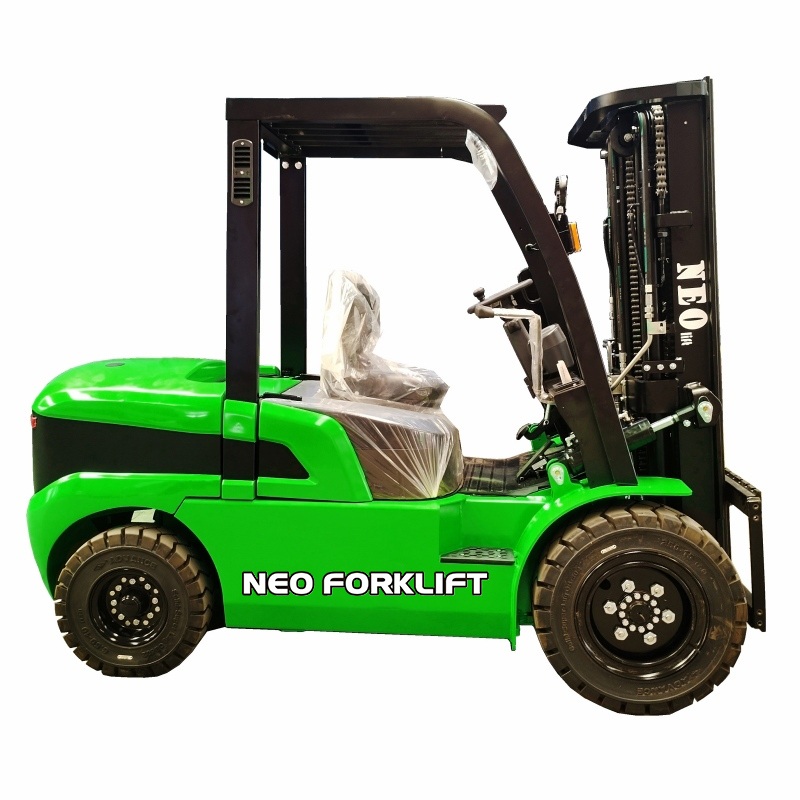
Four-wheel lithium-powered electric counterbalance forklift for industrial material handling.
Manufacturing Plants
Manufacturing facilities need reliable material transportation between storage areas, assembly lines, production workshops, and finished-goods warehouses.
Electric forklifts can move raw materials, components, and finished products without producing exhaust emissions during operation. Lithium batteries are especially useful where forklifts are required throughout long production schedules.
Food and Pharmaceutical Facilities
Indoor environments with strict cleanliness requirements often favor electric material handling equipment. Battery-powered forklifts avoid engine exhaust during operation and can be specified with suitable tires, protective options, and other equipment configurations according to the facility's hygiene and safety requirements.
For these environments, buyers should also evaluate the forklift's surface compatibility, cleaning requirements, and battery charging location.
Cold Storage and Temperature-Controlled Warehouses
Cold storage facilities place additional demands on forklift batteries. Low temperatures can reduce available battery capacity and affect charging performance.
A lithium forklift designed for cold storage may offer specialized battery protection or temperature management features. However, standard lithium battery configurations should not be assumed suitable for every freezer environment. Confirm the allowable operating and charging temperature range before purchasing.
High-Rack Warehousing and Narrow Aisle Operations
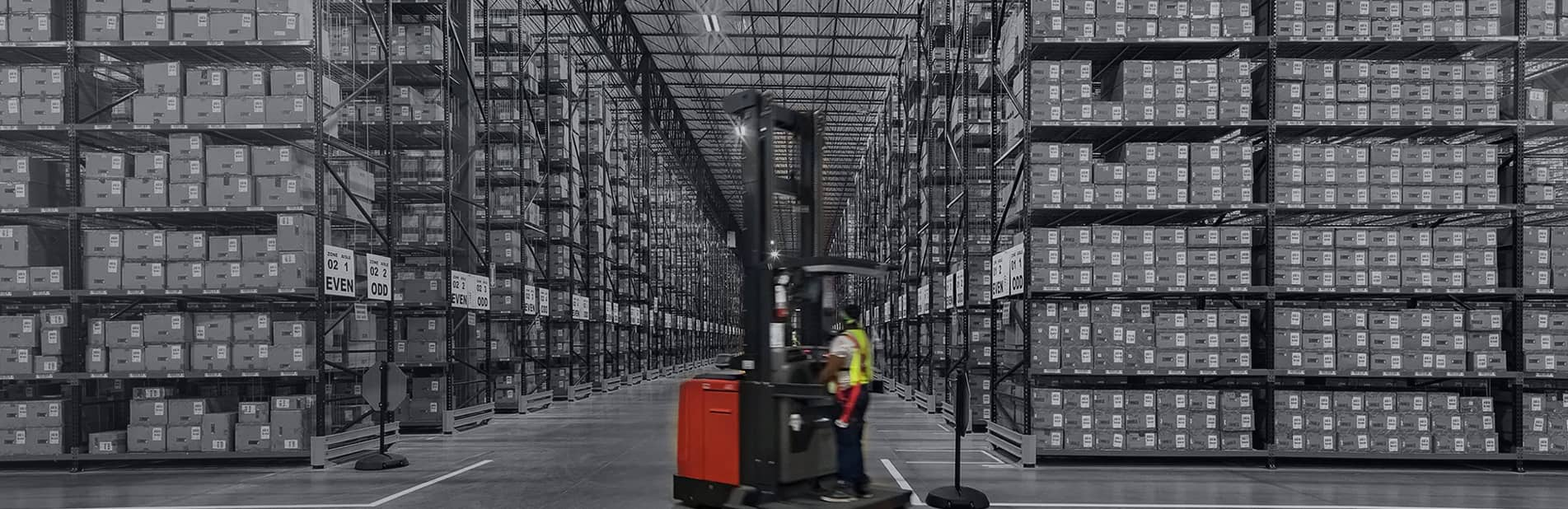
Facilities with high storage density often use reach trucks and Very Narrow Aisle (VNA) forklifts to maximize available warehouse space.
Lithium battery technology can support these applications by improving charging flexibility and reducing the need for routine battery changeovers.
NEO FORKLIFT has supplied lithium-powered VNA equipment for warehouse applications. One documented Middle East delivery included two man-up VNA forklifts, each with a 1.6-ton rated capacity and a 10-meter lifting height, equipped with 80V 600Ah lithium-ion batteries.

NEO FORKLIFT VNA forklift application for high-rack warehouse operations.
For warehouses that require high lifting heights and narrow aisle maneuverability, the NEO FORKLIFT VNA Forklift range provides different equipment configurations for specialized storage operations.
Choosing the right lithium battery forklift requires more than selecting a battery capacity. The forklift should be matched to the goods, rack system, operating environment, working schedule, and available charging facilities.
Load Capacity and Load Center
Start by calculating the maximum weight of the goods to be lifted. The rated capacity shown on a forklift specification sheet is normally based on a defined load center and configuration.
Attachments, longer forks, special pallets, and higher lifting requirements can reduce the actual residual lifting capacity. Always check the forklift's load chart for the intended operating condition.
Lifting Height and Warehouse Layout
Measure the height of the storage racks and the available clearance in the warehouse. A standard counterbalance forklift may be suitable for floor-level handling and conventional stacking, while a reach truck or VNA forklift may be more appropriate for high-density storage.
Turning radius, right-angle stacking aisle width, mast height, and overhead clearance should all be evaluated before ordering.
Daily Operating Hours and Shift Schedule
Determine how many hours the forklift operates each day and whether the warehouse runs one, two, or three shifts. Higher utilization generally increases the value of faster charging and lower routine battery maintenance.
Also estimate the average travel distance, lifting frequency, load weight, and idle time. These details help determine the battery capacity required for the actual work cycle.
Battery Voltage and Capacity
Battery voltage and ampere-hour capacity influence the electrical system, available energy, and operating duration. A higher Ah value does not automatically guarantee longer working time under every condition because energy consumption also depends on the truck's motors, load, speed, lifting frequency, and working environment.
Compare battery energy in kilowatt-hours when evaluating different voltage and capacity configurations.
Charger Power and Site Electrical Supply
Confirm the charger output, charging connector, installation requirements, and available power supply at the operating site. A fast-charging battery cannot deliver its full charging benefit if the facility does not provide sufficient electrical capacity.
Service Support and Battery Warranty
Ask about battery warranty coverage, expected operating conditions, BMS diagnostics, spare parts availability, and after-sales service. The warranty should clearly define coverage period, cycle or usage limits, capacity retention conditions, and exclusions.
NEO FORKLIFT offers different electric forklift configurations for warehouse and industrial material handling requirements. The following examples illustrate how battery capacity and vehicle specifications can vary according to the application.
NPML10 Mini Three-Wheel Electric Forklift
The NPML10 is a compact three-wheel electric counterbalance forklift designed for smaller working spaces. It comes standard with a lithium iron phosphate battery and is suitable for warehouses, elevators, workshops, and other areas where a smaller turning radius is important.
| Specification | NPML10 |
|---|---|
| Rated Load Capacity | 1,000 kg |
| Maximum Lifting Height | 3,000 mm |
| Battery Type | Lithium Iron Phosphate |
| Battery Voltage | 80 V |
| Battery Capacity | 140 Ah |
| Body Length | Approximately 1.3 m |
The compact design makes this model suitable for businesses that need a small electric forklift for limited-space material handling. Buyers can view the NPML10 Mini Three-Wheel Electric Forklift for additional product information and specifications.
NPSD30 and NPSD35 Four-Wheel Lithium Electric Counterbalance Forklifts
For heavier loads, NEO FORKLIFT offers an electric counterbalance forklift with a diesel-style chassis and lithium battery power. This configuration combines the structure of a conventional four-wheel counterbalance forklift with an electric drive system.

Four-wheel electric counterbalance forklift designed for demanding material handling applications.
| Specification | NPSD30 | NPSD35 |
|---|---|---|
| Rated Capacity | 3,000 kg | 3,500 kg |
| Load Center | 500 mm | 500 mm |
| Listed Lifting Height | 3,000 mm | 3,000 mm |
| Battery Type | Lithium | Lithium |
| Battery Voltage | 80 V | 80 V |
| Battery Capacity | 272 Ah | 272 Ah |
| Drive Motor | 22 kW | 22 kW |
| Lifting Motor | 15 kW | 15 kW |
These models are intended for operations that require higher load capacities and a more substantial counterbalance forklift structure. The NPSD30 and NPSD35 Lithium Electric Forklift product page provides further details on the available specifications and configuration.
For other operating requirements, businesses can also review the full NEO FORKLIFT Electric Counterbalance Forklift range, which includes three-wheel and four-wheel models with different battery options.
Both battery technologies have a place in industrial material handling. The best choice depends on how intensively the forklift will be used and how much the business values charging flexibility, maintenance simplicity, and long-term operating expenses.
Choose a lithium battery forklift when:
Choose a lead-acid forklift when:
For businesses that are unsure, comparing the same forklift capacity and working schedule under both battery configurations is a practical starting point. A supplier can help estimate battery energy requirements, charger specifications, daily operating time, and expected maintenance costs.
What is a lithium battery forklift?
A lithium battery forklift is an electric industrial truck powered by a rechargeable lithium-ion battery pack. It uses electric motors for traveling and lifting operations and is commonly used in warehouses, factories, distribution centers, and other material handling environments.
How long does a lithium forklift battery last?
Battery service life depends on the battery chemistry, operating temperature, charging practices, depth of discharge, cycle frequency, and maintenance conditions. Buyers should evaluate the manufacturer's cycle-life data, warranty terms, and guaranteed capacity retention rather than relying on a universal lifespan estimate.
How long does it take to charge a lithium battery forklift?
Some industrial lithium forklift battery systems can be fully charged in approximately one to two hours, but actual charging time depends on battery capacity, charger power, temperature, and the battery's charging limits. Confirm the specified charging time for the exact forklift configuration.
Are lithium battery forklifts more expensive than lead-acid forklifts?
Yes, lithium battery forklifts generally have a higher initial purchase price than comparable lead-acid models. However, lower routine maintenance, improved energy efficiency, flexible charging, and reduced battery changeover requirements may lower the total cost of ownership for high-utilization operations.
Do lithium forklift batteries require regular maintenance?
Lithium forklift batteries do not require the regular electrolyte watering and equalization maintenance associated with flooded lead-acid batteries. However, operators and technicians still need to inspect battery housings, connectors, cables, charging equipment, and BMS warnings according to the manufacturer's maintenance schedule.
Can a lithium battery forklift be charged during lunch breaks?
Yes, many lithium forklift systems support opportunity charging during lunch breaks, rest periods, or shift changes. The battery, BMS, and charger must be designed to support this charging pattern, and the manufacturer's charging instructions should always be followed.
Are lithium battery forklifts suitable for indoor warehouses?
Yes. Lithium battery electric forklifts are well suited to indoor warehouses because they produce no tailpipe exhaust during operation and generally generate less operating noise than internal combustion forklifts. The selected model should also match the warehouse's aisle width, floor conditions, load requirements, and lifting height.
Are lithium battery forklifts suitable for cold storage?
Some lithium battery forklifts can be configured for cold-storage environments, but battery performance and charging limits depend on the chemistry and temperature-management system. Confirm the approved operating and charging temperature range and whether a battery heating option is required.
What is the difference between an LFP forklift battery and other lithium-ion batteries?
LFP, or lithium iron phosphate, is one type of lithium-ion battery chemistry. It is often selected for industrial applications because of its thermal stability and cycle-life characteristics. Other lithium-ion chemistries have different energy density, operating characteristics, and application requirements. The appropriate option depends on the forklift design and working conditions.
How do I choose the right lithium battery forklift capacity?
Start with the maximum pallet or load weight, load center, lifting height, attachment requirements, working hours, and warehouse aisle dimensions. Then compare suitable forklift models, battery energy capacity, charger output, and residual load capacity under the actual operating configuration.
A lithium battery forklift can be a worthwhile investment for businesses looking to improve material handling efficiency, reduce routine battery maintenance, and make better use of operating time. Its advantages are especially valuable in high-utilization warehouses, distribution centers, manufacturing facilities, and specialized storage environments.
However, the right solution depends on more than battery chemistry. Load capacity, lifting height, aisle width, shift schedule, charger compatibility, and operating temperature all influence the final equipment choice.
NEO FORKLIFT provides electric counterbalance forklifts, lithium-powered warehouse equipment, and customized material handling solutions for different industrial applications. From compact three-wheel forklifts to higher-capacity four-wheel models and specialized VNA equipment, buyers can discuss their operating conditions and equipment requirements with the NEO FORKLIFT team.
Looking for a lithium battery forklift for your warehouse or factory? Contact NEO FORKLIFT with your required load capacity, lifting height, daily operating hours, and application details to discuss a suitable electric forklift configuration.
Add:No.609 Tahui Road , Shihudang Town, Songjiang District ,Shanghai, China


Friendly Links :
© 2026 Shanghai Zon-Cho Huge Science And Technology Co., Ltd. All Rights Reserved.
|Sitemap|Xml |Privacy Policy




